If you are reading this, you are probably already past the hype.
You have seen the demos. You have clicked through a dozen landing pages. Every AI support tool promises the same thing: automation, instant answers, and fewer tickets. And yet, if you talk to founders and support leads who have tried these tools in production, the story is usually more complicated.
Based on my experience working with real support teams, most AI support tools do not fail because the AI is “bad”. They fail because they are bolted onto broken systems.
So the real buying decision is not “Which chatbot is smartest?”
It is “Will this actually resolve customer issues inside our existing support reality?”
In this article, I will walk you through how to think about that decision; and how to avoid buying a chatbot that sounds confident but leaves your team cleaning up the mess.
1. The real decision buyers are making (even if they do not realise it)
On the surface, it looks like you are buying a chatbot.
In reality, you are choosing whether to redesign your support system around AI; or just add another layer on top of it.
Most tools focus on conversation. But customers do not contact support because they want to chat. They want something fixed, explained, refunded, updated, or escalated.
That is the first mental shift:
Resolution, not conversation
Accuracy, not confidence
Systems, not bots
Once you adopt that lens, a lot of shiny demos start to look very thin.
2. Why most AI support tools disappoint after the demo
Demos are clean. Production is messy.
In demos:
Knowledge is perfectly curated
Questions are phrased clearly
Edge cases do not exist
Escalation is a single happy-path button
In real support:
Customers ask half-formed questions
Policies live in five different docs
Answers change weekly
Humans need context when they take over
Most AI support tools struggle because they assume:
Knowledge quality magically improves over time
Adding “actions” equals solving support
AI accuracy increases just by seeing more chats
None of these are true by default.
Without a shared source of truth and clear workflows, AI simply becomes a faster way to deliver inconsistent answers.
3. The three things that actually determine success
When AI support works, it is not because of a single feature. It is because three things are designed as one system.
1. Knowledge (the boring part everyone underestimates)
Your AI is only as good as the knowledge you give it; but more importantly, how that knowledge is maintained.
What matters is not:
How many documents you upload
Which model you use
What matters is:
Is there one source of truth?
Can teams update it without breaking consistency?
Does internal knowledge match what customers see?
If your help centre says one thing, internal Slack answers another, and your AI invents a third version, trust erodes fast.
2. Workflow and actions (but grounded in reality)
Yes, actions matter. Checking order status. Creating tickets. Booking calls.
But actions without workflow design create new problems:
When should the AI act vs ask?
What happens if data is missing?
How are failures surfaced?
Support is not just “do a thing”. It is a sequence of decisions. Tools that treat actions as magic buttons often collapse under edge cases.
3. Human hand-off (clean, contextual, visible)
This is where most tools quietly fail.
A good hand-off means:
The human sees what the AI saw
The customer does not repeat themselves
Ownership is clear
If escalation feels like falling off a cliff, your team pays the price in frustration and longer resolution times.
4. A simple before/after support scenario
Let us make this concrete.
Customer question:
“Hey, I was charged twice last month and my invoice doesn’t match what I see in the app.”
Typical AI chat tool
Confidently explains billing policy
Links to a generic article
Cannot see account-specific data
Escalates with no context
Result: The customer is annoyed, and the human agent starts from scratch.
System-based AI support
Understands billing + product context
Checks account data or asks for what is missing
Explains why the discrepancy exists
Escalates with full context if needed
Result: Either resolved instantly, or escalated cleanly with trust intact.
The difference is not “smarter AI”. It is shared knowledge, clear workflow, and thoughtful escalation.
5. How to evaluate AI support tools using this lens
When you are evaluating tools, stop asking:
“What actions does it support?”
“How fast can I launch?”
Start asking:
Where does knowledge live, and who owns it?
How does accuracy improve; concretely?
What does a failed answer look like?
How does my team work with this daily?
Ask vendors to show:
A messy, real question
A failed attempt and recovery
A human taking over mid-flow
If they cannot show that, the demo is doing too much work.
6. Where platforms like Mando AI fit (as an example)
This is where platforms like Mando AI tend to show their strengths.
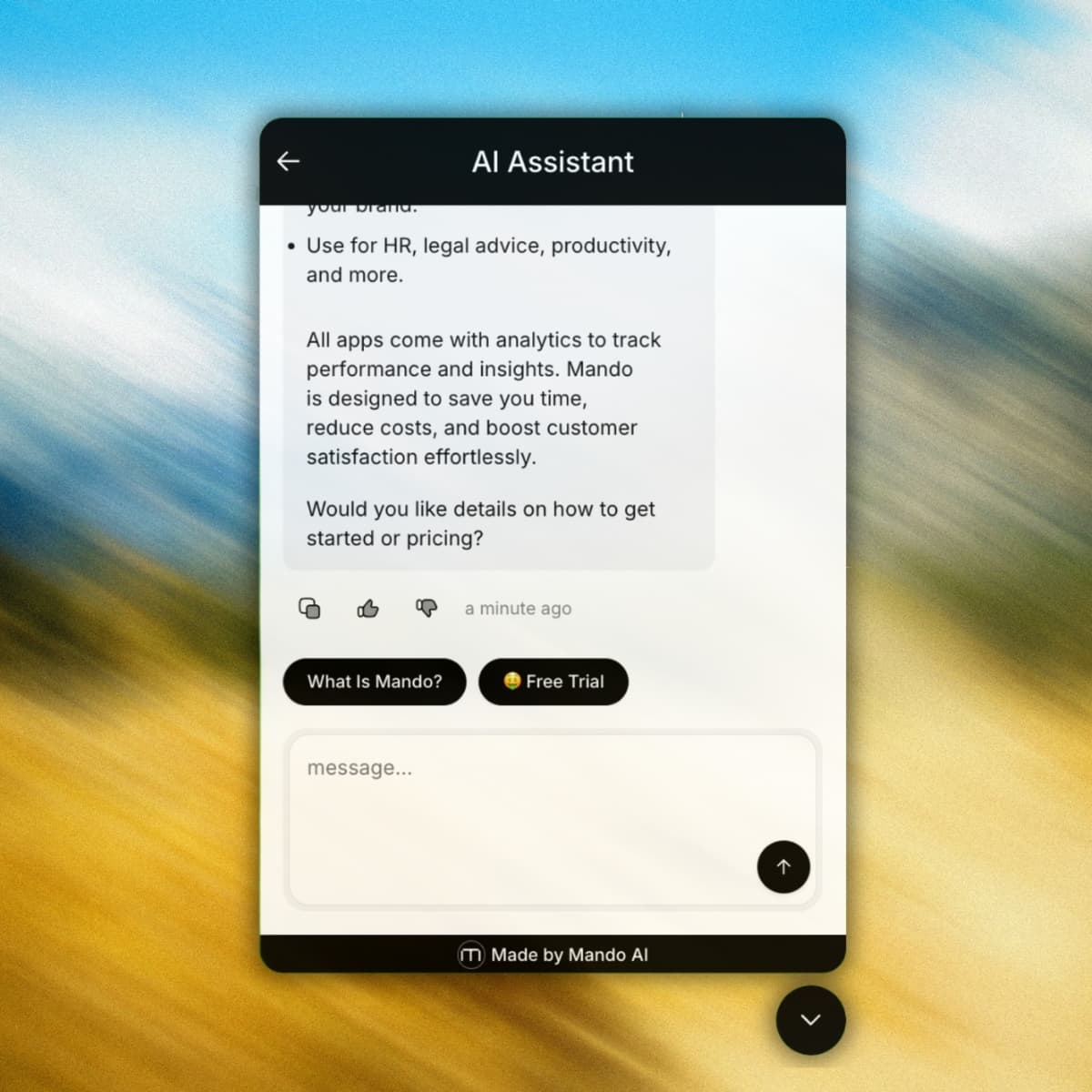
Not because they promise magic automation; but because they are built as support systems, not chat widgets.
The emphasis is on:
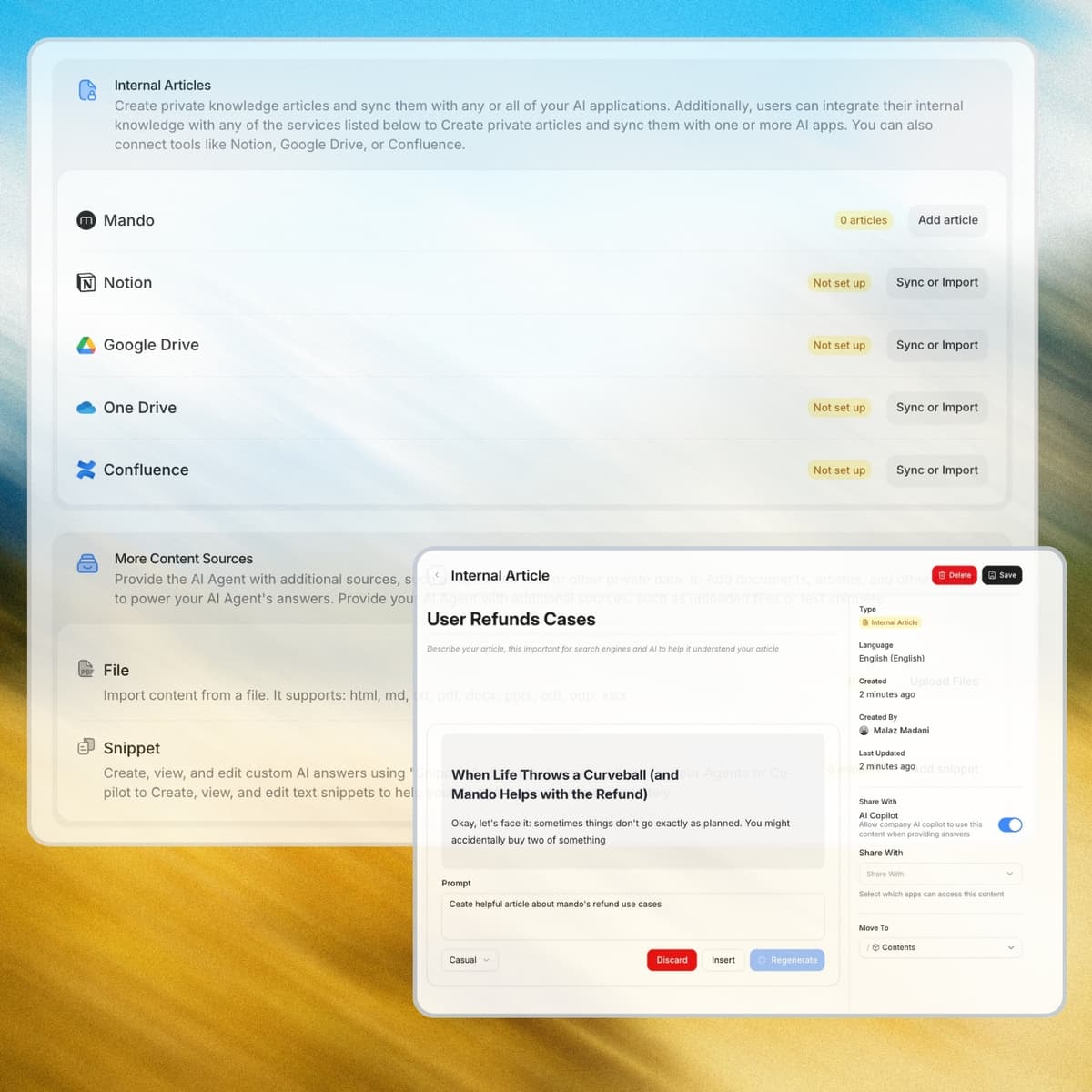
One shared source of truth for customers and teams
Consistent answers across external and internal use
Clear escalation paths instead of dead ends
That matters if your problem is not starting AI support, but making it work without creating chaos.
It is a practical reference point for teams who care more about long-term outcomes than quick wins.
7. How to know if you are ready to buy; or should wait
You are likely ready for AI support if:
You see the same questions every week
Your knowledge is mostly written down
Your team agrees on “correct” answers
You can commit to ongoing ownership
You should probably wait if:
Your support process is still undefined
Knowledge lives only in people’s heads
You expect set-and-forget automation
You are buying purely off demos
AI support rewards clarity. It punishes chaos.
Final thoughts
Most AI support tools fail quietly. Not in week one; but in month three, when edge cases pile up and trust erodes.
The real buying decision is not about chatbots. It is about whether you are ready to treat support as a system where knowledge, actions, and humans work together.
If you evaluate tools with that lens, you will immediately see which ones are built to talk; and which ones are built to resolve.
And that, in my experience, is the difference that actually matters.